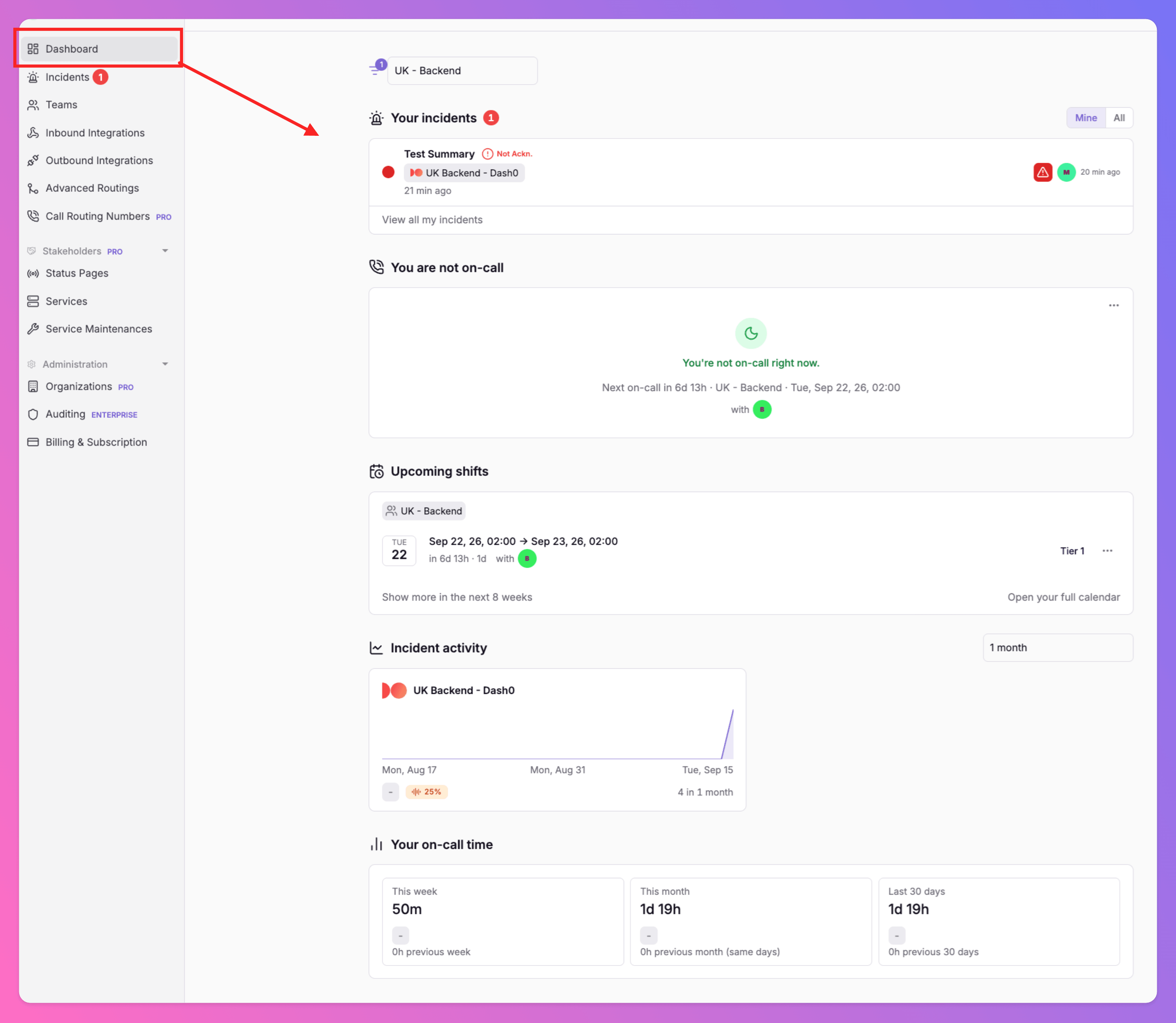
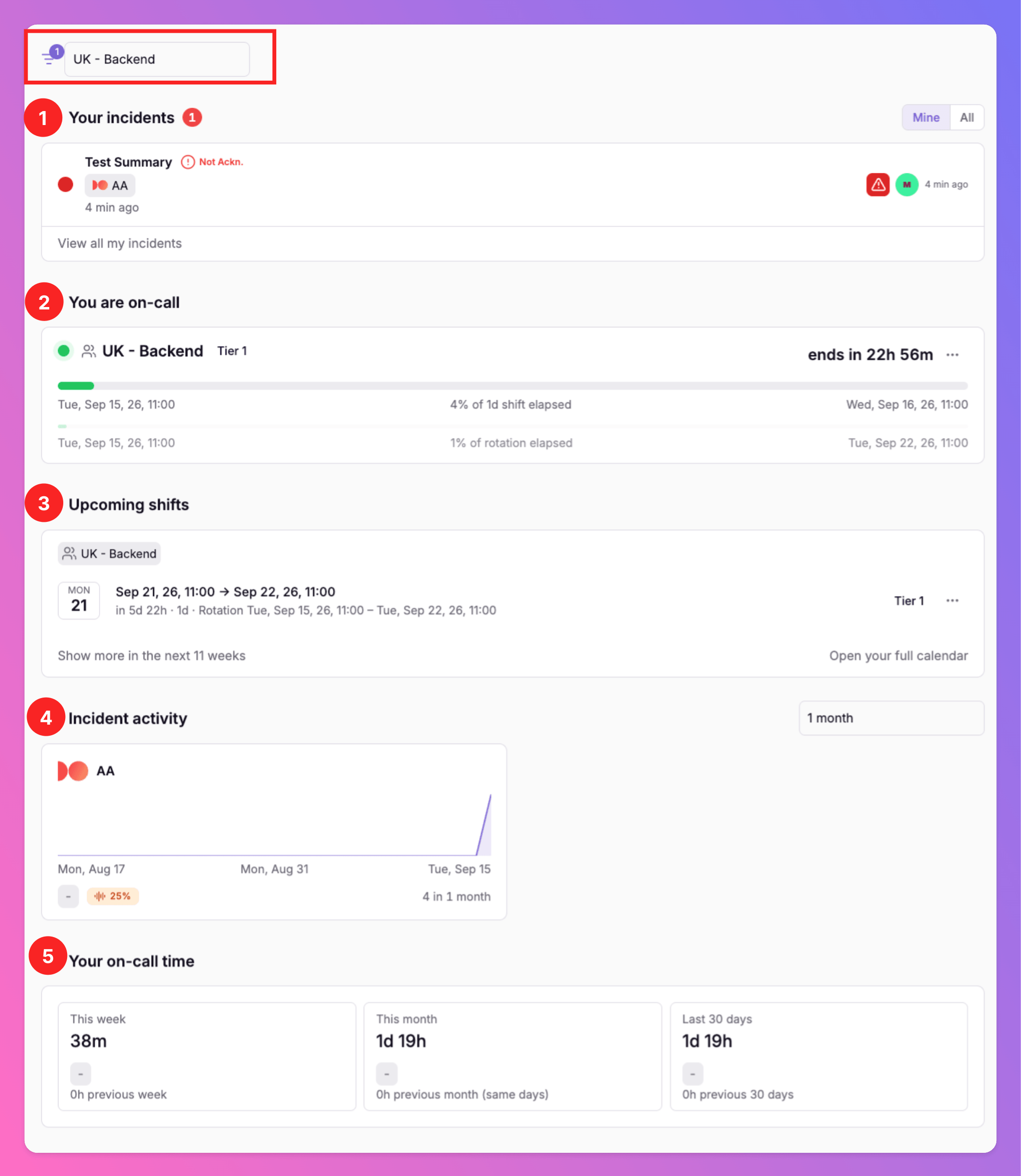
The Dashboard is your home page in All Quiet. It shows whether you are on-call right now, who you are on-call with, your next shifts, open incidents that need your attention, recent incident activity, and how much on-call time you have logged. Open it from the sidebar: Dashboard. After you sign in, this is the default start page. You can switch the start page to Incidents if you prefer. Anyone signed in to the app can use the Dashboard. Dashboard: on-call card, Your incidents, Upcoming shifts, Incident activity, Your on-call time, and the team filter

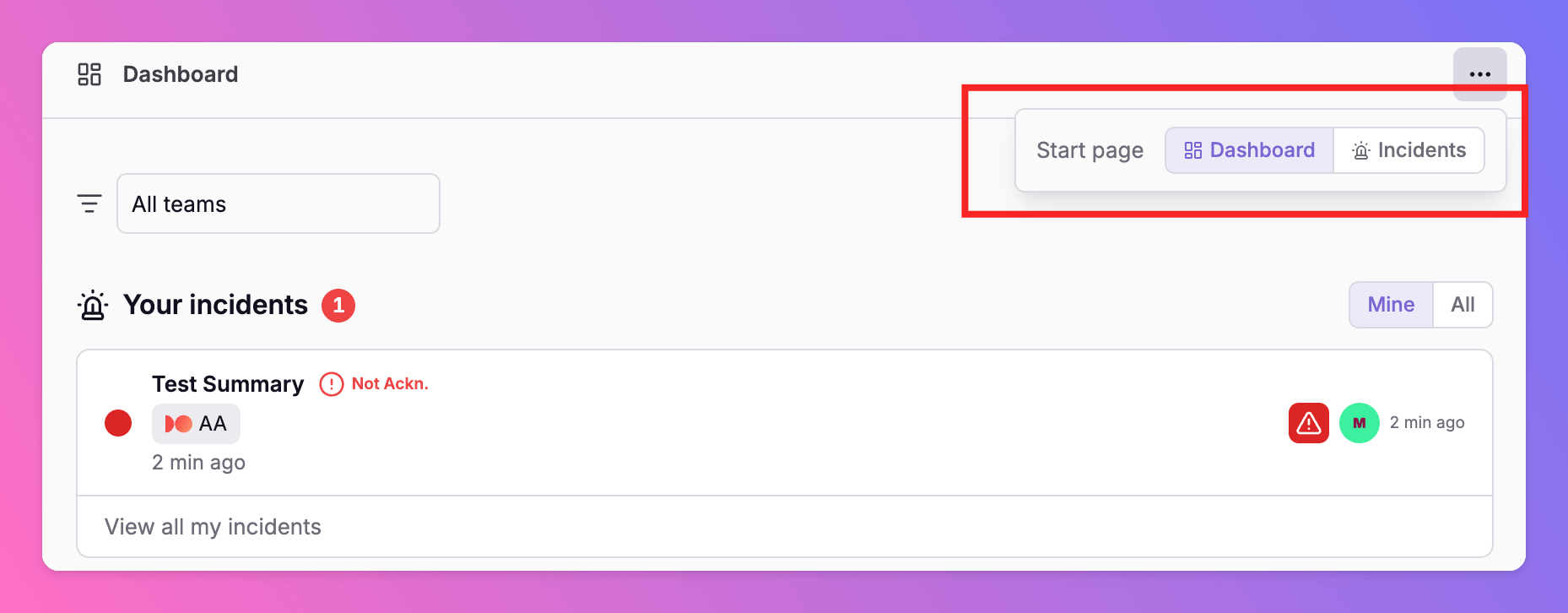
Choose your start page

Pick whether All Quiet opens on the Dashboard or the Incidents list after you sign in.
  1. Open the Dashboard overflow menu and choose Start page, or use the matching control on the on-call status card when you are not on-call.
  2. Toggle Dashboard or Incidents.
The choice is stored in this browser. The sidebar marks whichever page is your start page. Start page: Dashboard overflow menu or not-on-call card, with the sidebar marking the start page

Filter by team

If you belong to more than one team, a team filter at the top of the page scopes:
  1. Your incidents
  2. On-call status
  3. Upcoming shifts
  4. Incident activity
  5. Your on-call time
Click a team in Incident activity to apply the same filter to the whole Dashboard. With a team selected, activity cards open that integration’s incident overview. Dashboard team filter and Incident activity with a team selected
Your incidents

Your incidents lists open incidents assigned to you or needing your on-call attention. The list updates live.
  1. Switch Mine / All to include every open incident on your teams.
  2. The count badge opens the full incidents list.
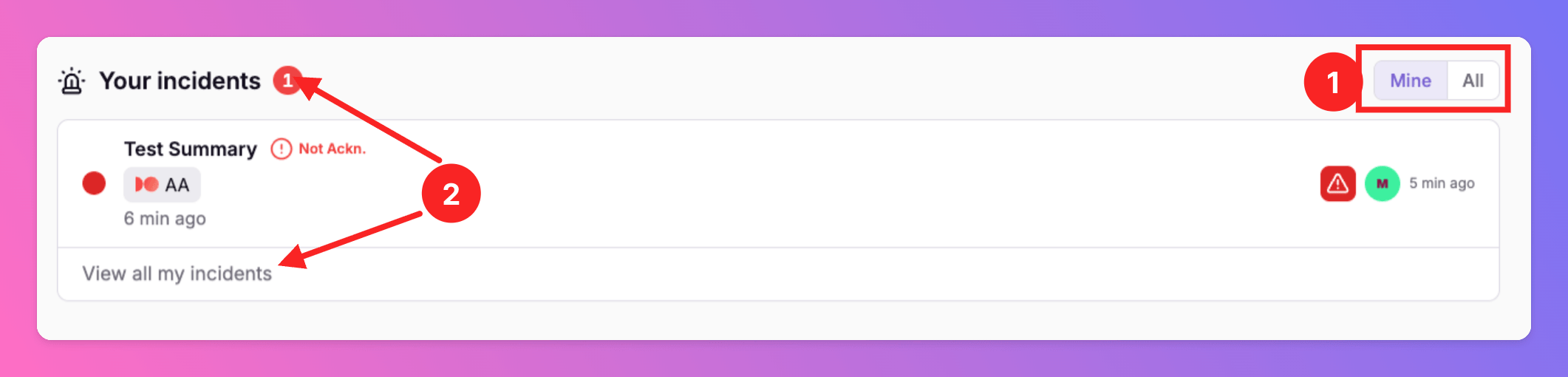
Of course, you can also open the incident details from the list. Your incidents card with Mine / All and the count badge

You are on-call

When you are on-call, this card shows the active team, the escalation tier, who else is on shift, and when coverage ends.
  • Shift is the current on-call window you are in (for example today 08:00–17:00, or an overnight block). The card shows when that window ends, or that the shift is open-ended.
  • Rotation is the cycle that put you on this schedule (daily, weekly, and so on). The card shows when that rotation hands off to the next person or group. See Rotations.
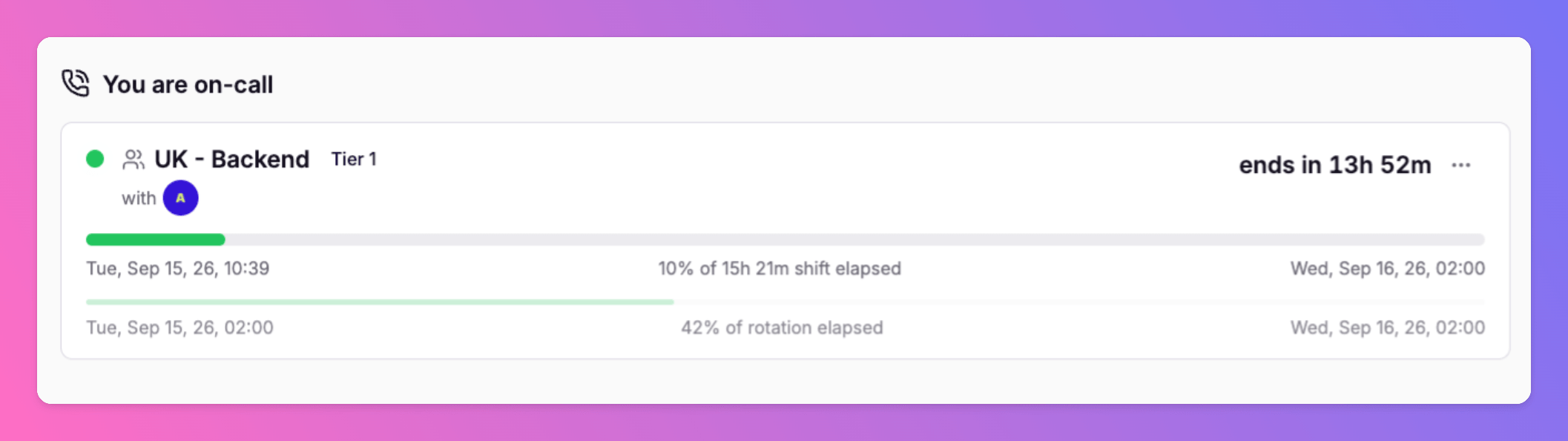
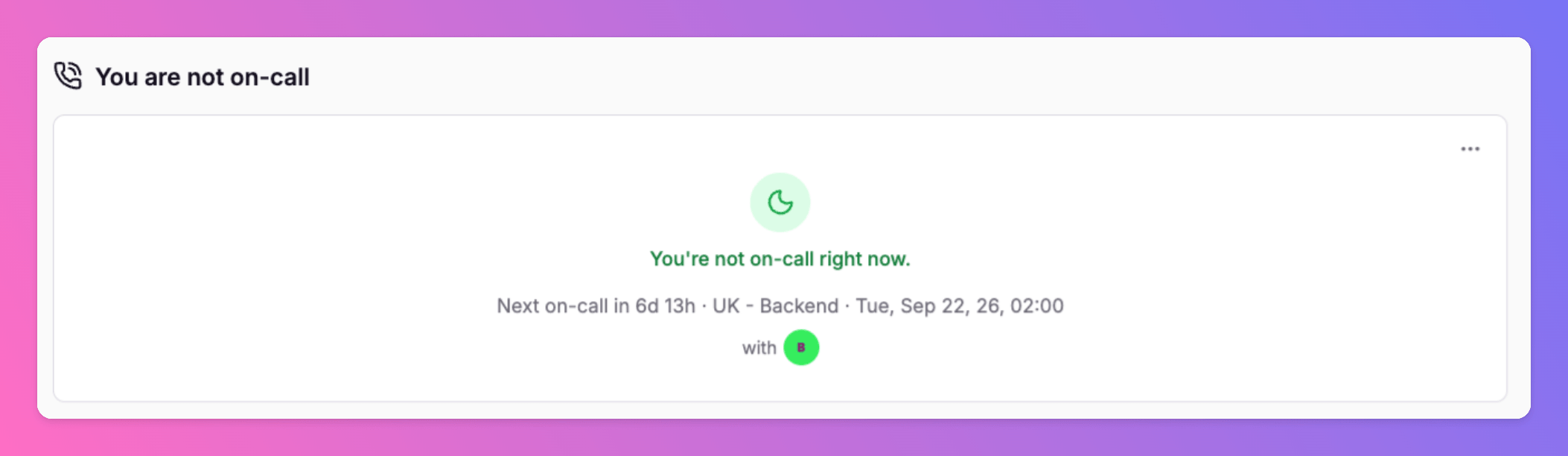
Shift end and rotation end are often different. A weekly rotation with weekday hours can end each day at 17:00 (shift) while you stay the on-call person until Monday (rotation). When they are the same — for example a 24/7 week that hands off at the shift boundary — the card does not repeat both. You are on-call card: team, tier, who else is on shift, shift end, and rotation end If you are not on-call, it shows the next upcoming shift, or that none are scheduled. On-call status card when you are not on-call, showing the next upcoming shift or none scheduled

Start an override from the current or upcoming shift

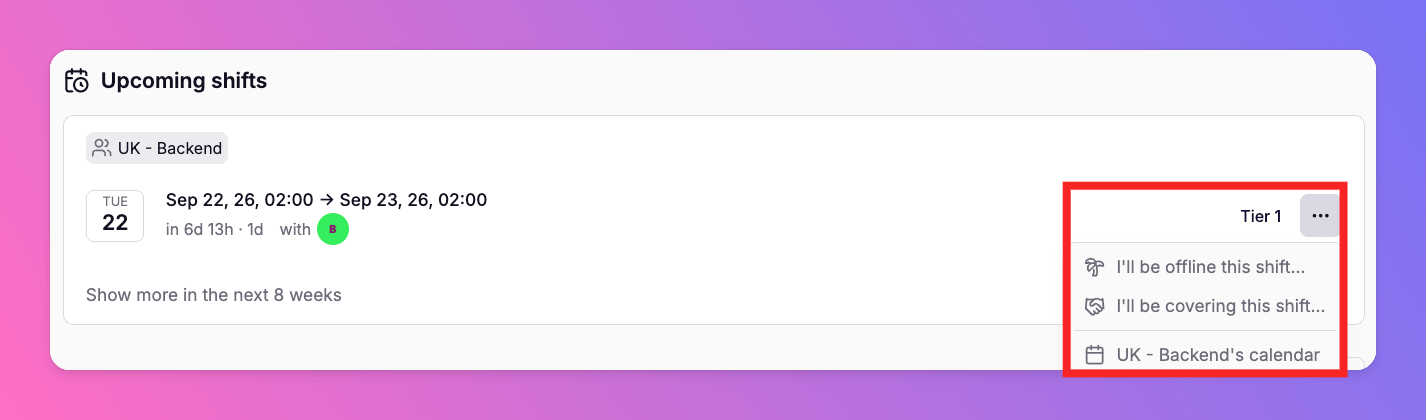
From the current or upcoming shift menu you can:
  • I’ll be offline… or I’ll be covering… for this shift, or for the full rotation when that is different
  • Add an override
  • Manage all your overrides
  • Open the team calendar
The override form is the same one used under Account → Overrides, Team → Overrides, and the calendar. See Personal Overrides. Shift menu: I'll be offline, I'll be covering, add override, manage overrides, open team calendar

Upcoming shifts

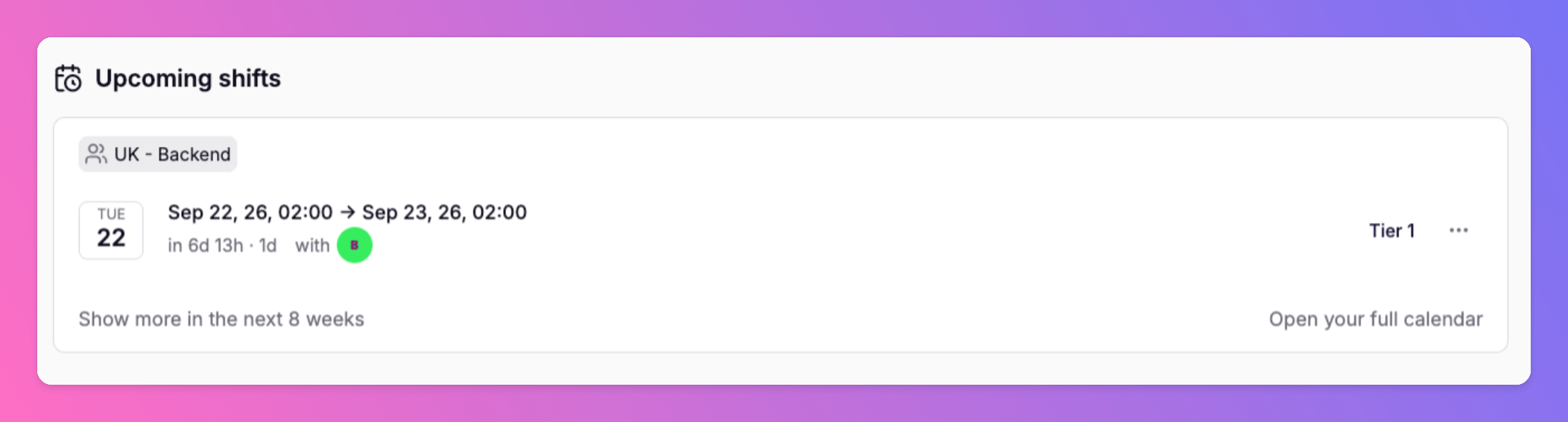
Upcoming shifts lists the next shifts per team, up to 90 days ahead. Expand the list to see more, or open your full personal calendar. Upcoming shifts list, up to 90 days, with expand and open personal calendar
Incident activity

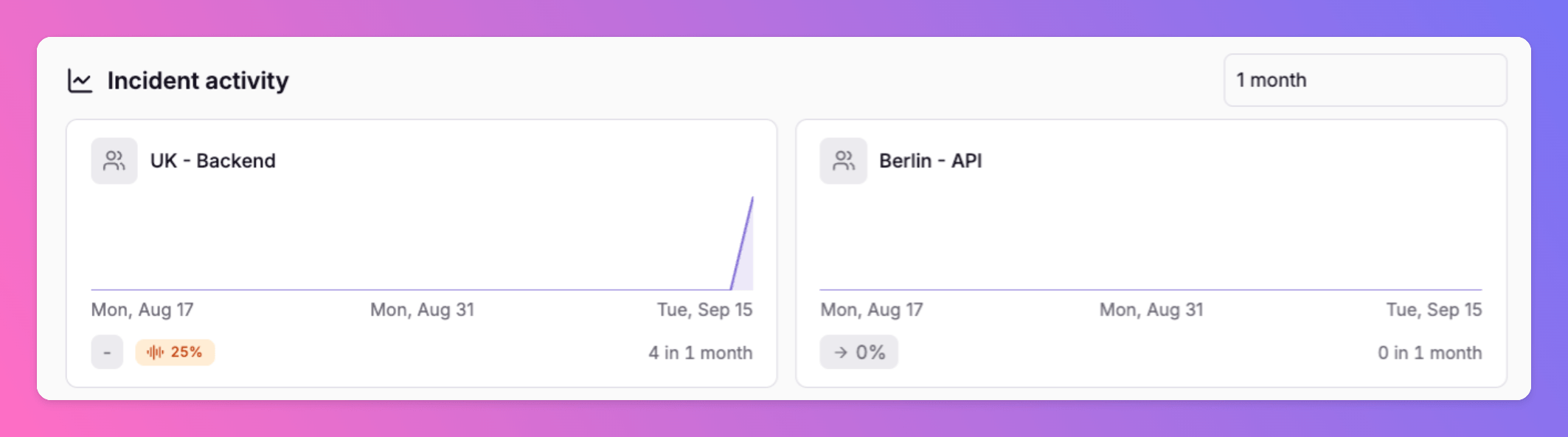
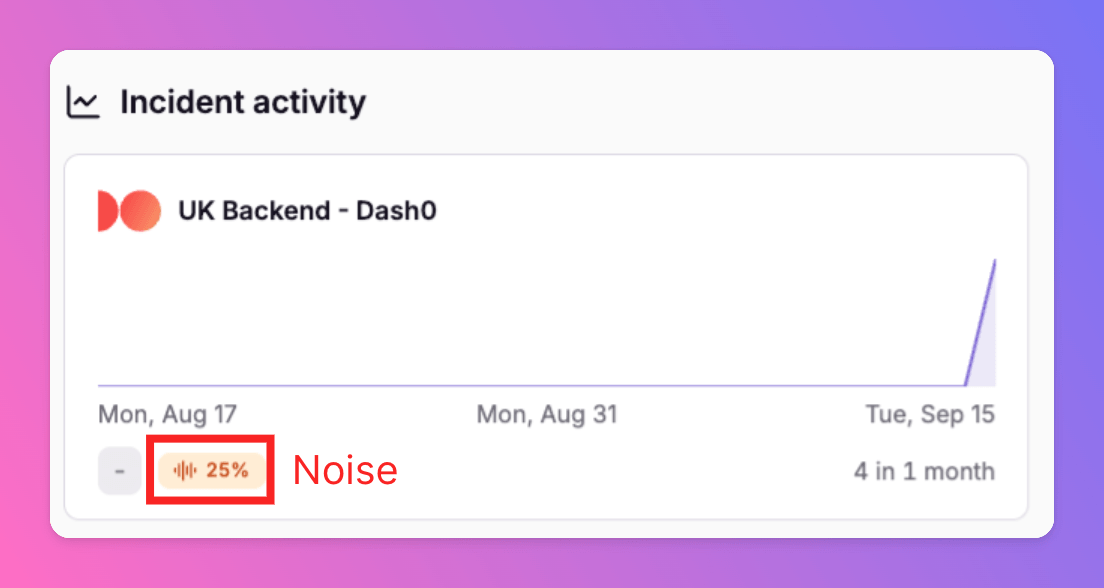
Incident activity charts incident volume for Last 7, 14, or 21 days, 1 month, or a custom range. Incident activity chart with Last 7 / 14 / 21 days, 1 month, or custom range When a team is selected, the chart also shows incidents by integration. Each integration’s incidents are color-coded, and noise is shown as part of the graph, referring to incidents that integration created and auto-resolved within the integration’s noise limit. Incident activity with a team selected, showing volume and noise
Your on-call time

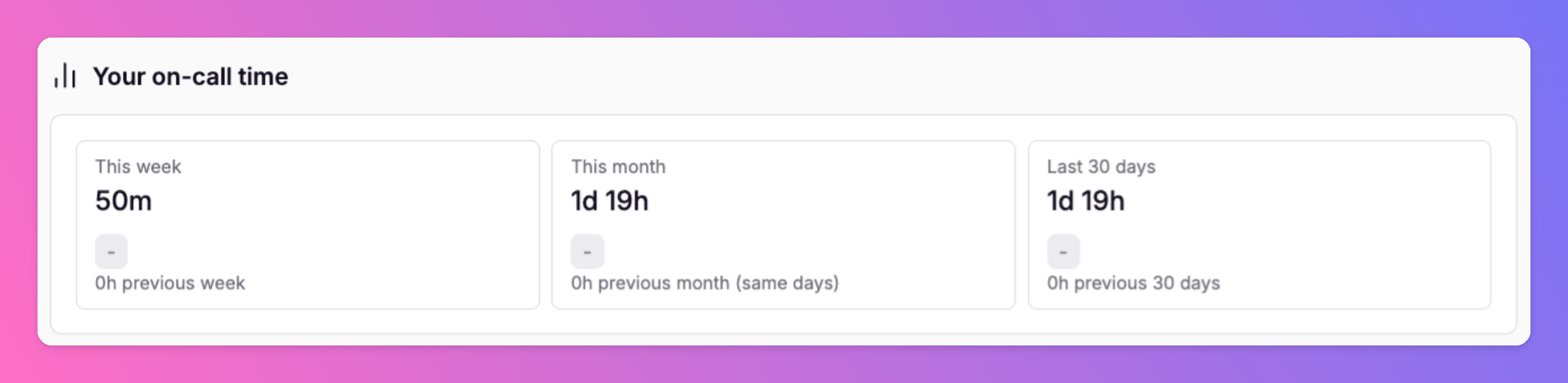
Your on-call time compares this week, this month, and the last 30 days with the previous period of the same length. You can either show it per team, or globally for all of your teams. Your on-call time: this week, this month, and the last 30 days compared with the previous period